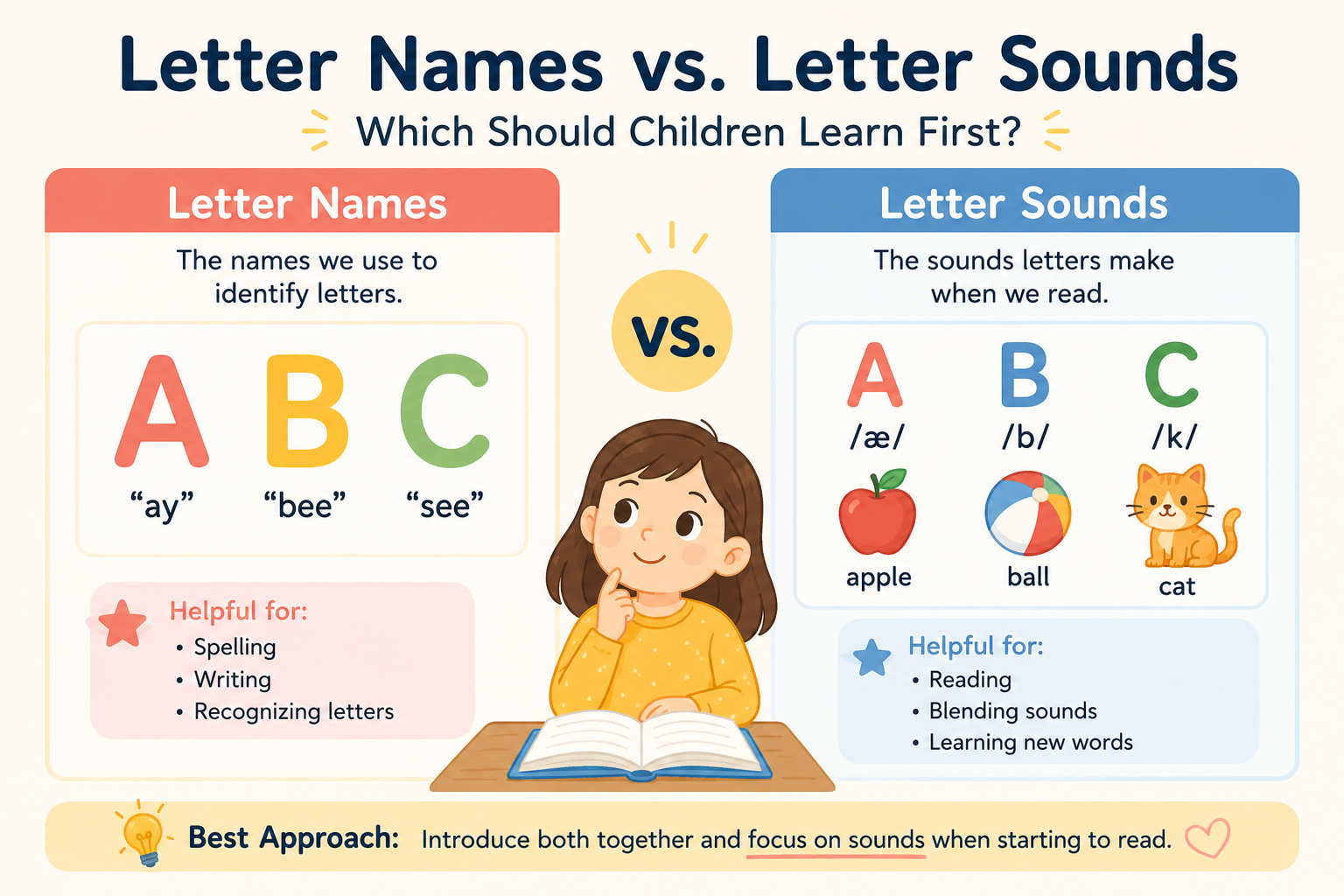
Which Should Children Learn First?
If you’re helping your child learn English, you’ve probably wondered:
Should my child learn the alphabet first, or should they learn letter sounds?
It’s one of the most common questions parents ask.
Many families spend weeks helping children memorize:
A, B, C, D, E…
But when they open a simple English book, their child still cannot read even the easiest words.
Why?
Because knowing the names of letters is different from knowing the sounds they make.
Understanding this difference can completely change the way your child learns to read.
What Are Letter Names?
Letter names are simply the names we use to identify each letter of the alphabet.

For example :
- A = “ay”
- B = “bee’”
- C = “see”
- D = “dee”
Children usually learn these by singing the Alphabet Song.
Learning letter names is useful because children need them for spelling, writing, and talking about letters.
However, letter names alone do not teach children how to read words.
What Are Letter Sounds?
Letter sounds are the sounds letters make when we read.
For example :
- a -> /æ/ as in apple
- b -> /b/ as in bell
- c -> /k/ as in cat
- m -> /m/ as in moom
When children learn these sounds, they can begin blending them together.
For example :
/c/ + /a/ + /t/
becomes
Cat
This is the foundation of reading.
Why Are Letter Sounds More Important Beginning Readers?
Imagine asking a child to read the word :
Cat
If they only know the letter names, they might say :
“ see – ay – tee.”
Bur those names do not naturally become the word cat.
When children know the letter sounds, they can blend them together and read independently.
That is why many reading specialists introduce letter sounds early in the reading journey.
Does This Mean Letter Names Are not Important?
Not at all.
Children need both.
The question is not which one is better, but which one should be emphasized first when learning to read.
A balanced approach works best.
Children can become familiar with letter names while spending more time practicing letter sounds for reading.
Fun Activities to Practice Letter Sounds
You don’t need expensive materials.
Try these simple activities at home:
- Sound Hunt
Choose one letter sound and find objects around the house that begin with that sound.
2. Picture Matching
Match pictures with their beginning sounds.
3. Read Together
Pause occasionally and ask :
“What sound does this letter make?”
Keep the activity fun and pressure – free.
Common Mistakes Parents Make
Focusing only on the Alphabet Song
Children may know the alphabet perfectly but still struggle to read.
Correcting too quickly
Give children time to think and blend sounds on their own.
Expecting perfection
Learning to read takes practice.
Celebrate progress, not perfection.
Frequently Asked Questions
Should my child learn letter names before phonics?
Children can learn both, but understanding letter sounds is especially helpful when beginning to read.
Can children learn letter names and sounds at the same time?
Yes. Many children naturally learn both together when they read books and practice regularly.
What comes after letter sounds?
A common progression is :
- Letter Sounds
- Phonics
- CVC Words
- Sight Words
- Decodable Readers
- Storybooks
Each step builds on the previous one.
Final Thoughts
Letter names help children identify letters.
Letter sounds help children read words.
Both are important, but when your goal is reading, letter sounds deserve special attention in the beginning.
Instead of asking,
“Does my child know the alphabet?”
Try asking,
“Can my child use letter sounds to read a new word?”
That small change in focus can make a big difference.