Why Phonics Matters and How to Teach It the Right Way
If you’ve recently started helping your child learn English,
you’ve probably heard one word over and over again:
Phonics
Parents often ask me questions like these:
- What exactly is phonics?
- Does my child really need to learn phonics?
- Can children read English without it?
- When is the best age to start?
As an English teacher, I understand why these questions are so common.
Many families buy phonics workbooks
because everyone says phonics is important.
But surprisingly, many children finish an entire phonics program and still struggle to read a simple storybook.
Why does this happen?
The answer is simple.
Learning phonics and becoming a confident reader are not exactly the same thing.
Phonics is the foundation – but it is only the beginning.
This guide will help you understand what phonics really is, why it matters, and how to use it effectively to build lifelong reading skills.
What is Phonics?

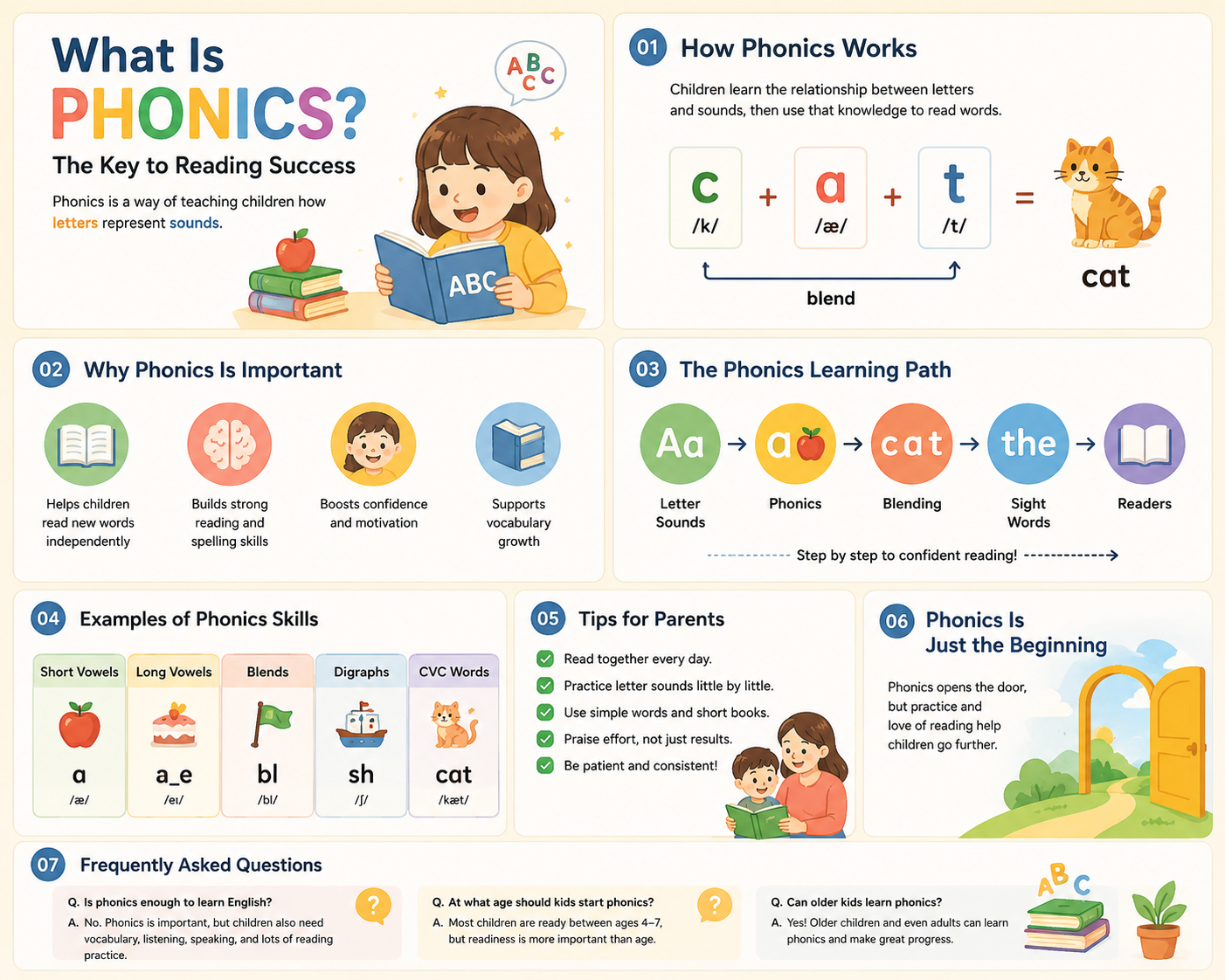
Phonics is a method of teaching children how written letters represent spoken sounds.
Instead of memorizing whole words one by one, children learn the relationships between letters and sounds.
For example:
- m -> /m/
- S -> /s/
- Sh -> /ʃ/
- Ch -> /tʃ/
When children understand these sound patterns, they can begin reading unfamiliar words by blending sounds together.
For example :
C + a + t = cat
Rather than memorizing “cat” as one picture, children learn how to read it.
That is the true purpose of phonics.
Why Is Phonics So Important?
Imagine trying to read a book written in a language where every word must be memorized individually.
Reading would be slow and frustrating.
Phonics gives children a decoding strategy.
Instead of guessing words, they learn how to work them out independently.
This builds:
- Reading confidence
- Vocabulary growth
- Spelling ability
- Pronunciation awareness
- Independent reading skills
Most importantly, it helps children become readers instead of word memorizers.
When Should Children Start Phonics?
Every child develops differently.
Instead of focusing only on age, look for signs of readiness.
A child may be ready when they can :
- Recognize most letters
- Enjoy listening to stories
- Notice rhyming sounds
- Stay engaged in short reading activities
Learning should remain playful rather than pressured.
Five Common Mistakes Parents Make
- Finishing the workbook too quickly
Mastery matters more than speed
2. Memorizing instead of blending sounds
Reading should become a thinking process, not a memory test.
3. Using books that are too difficult
Success builds confidence.
4. Correcting every mistake immediately
Children need time to think and self – correct.
5. Stopping after phonics
Continue with decodable readers, sight words, and enjoyable storybooks.
What Should Children Learn After Phonics?
A strong reading journey usually looks like this :
- Letter sounds
- Phonics
- CVC words
- High – frequency sight words
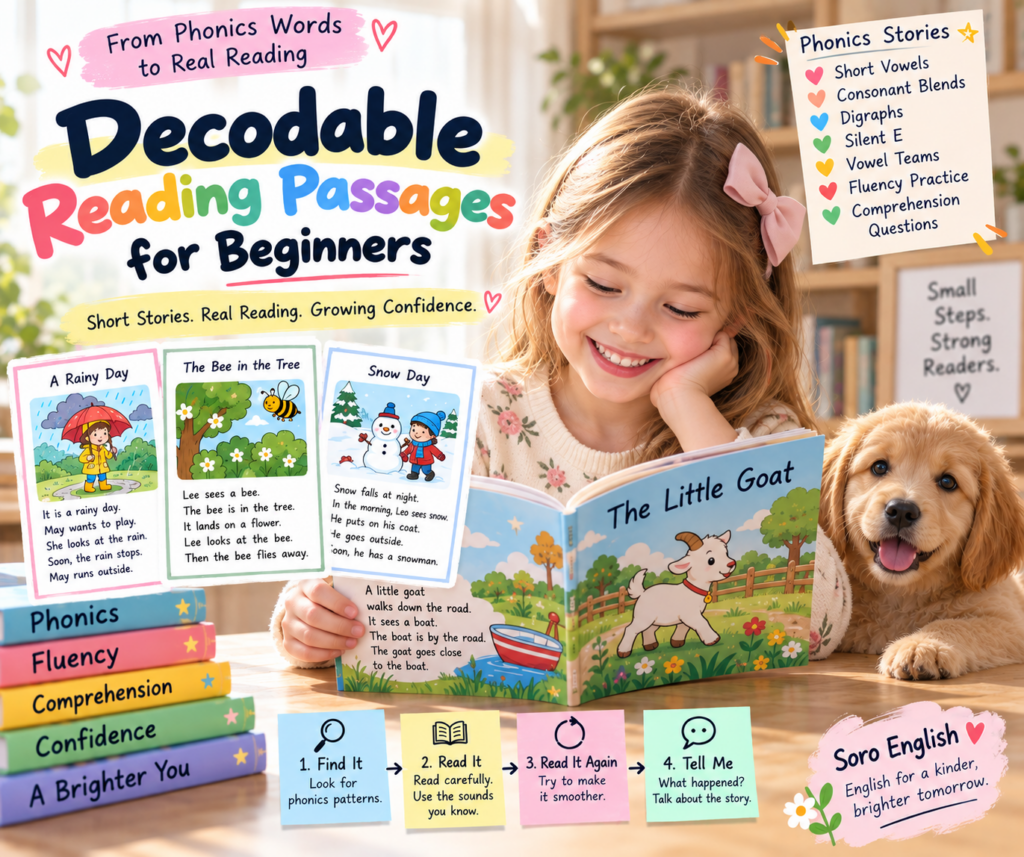
- Decodable readers
- Easy storybooks
- Everyday reading habits
- Grammar through meaningful reading
Each step prepares children for the next.
How Parents Can Help at Home
You do not need expensive materials.
Simple daily habits make the biggest difference.
- Read together every day.
- Practice letter sounds naturally.
- Celebrate effort.
- Allow mistakes.
- Make books part of nutes daily life.
Even ten to fifteen minutes each day can have a lasting impact.
Frequently Asked Questions
Is phonics enough to learn English?
No. Phonics is an essential foundation, but children also need vocabulary, listening, speaking, and regular reading.
Can older children still learn phonics?
Absolutely. Older beginners often make rapid progress because they can understand learning patterns more quickly.
Should I teach letter names or letter sounds first?
Letter sounds are usually more helpful when the goal is reading.
Phonics is not the finish line.
It is the first confident step toward becoming a lifelong reader.
Children who enjoy reading are more likely to continue learning, exploring, and growing.
Instead of asking,
“How quickly can my child finish phonics?”
Try asking
“How can I help my child love reading?”
That single change in mindset often makes the biggest difference of all.