When my students were getting close to the end of their phonics lessons, I started bringing in little books with short sentences. I loved watching their faces when they got to the end of a sentence and realized they had read the whole thing on their own.
Some of the children who were ready to put away a page of phonics words were happy to turn one more page of a story. There was something they wanted to find out. Where did the cat go? What was in the box? And when they could tell me what happened, they looked just as pleased as they did when they read the sentence by themselves.
These five short reading passages are for children who can read simple sentences and are ready to talk about what they mean. Each story has three questions and an answer key at the end. Start with one story. Let your child answer aloud, then ask them to point to the words that helped them.
Which Passage Should Your Child Start With?
The five passages get a little harder as you go. Here is how I’d match them to where your child is in phonics.
| Passage | What your child needs to read it | Good starting point for |
| 1. The Cat in the Bag | Short vowels and simple CVC words (Sam, bag, mat, cat, Pip), plus a few common words like the, he, his | Children who have finished short vowels |
| 2. A Hat for Dot | Consonant Blends and endings ( lifts, lands, rock, picks, runs ) | Children who are comfortable with blends |
| 3. A Snack for Two | Digraphs and longer words ( lunch, kitchen, together ), plus a few new sight words | Children who know sh, ch, th |
| 4. A Spot for the Seed | Vowel teams and two-syllable words( seed, bean, green, shoot, water, window ) | Children who have started long vowels |
| 5. The Last Page | Longer sentences, several two-syllable words( Friday, bedtime, brother ), and a question that needs a guess | Children reading short sentences smoothly |
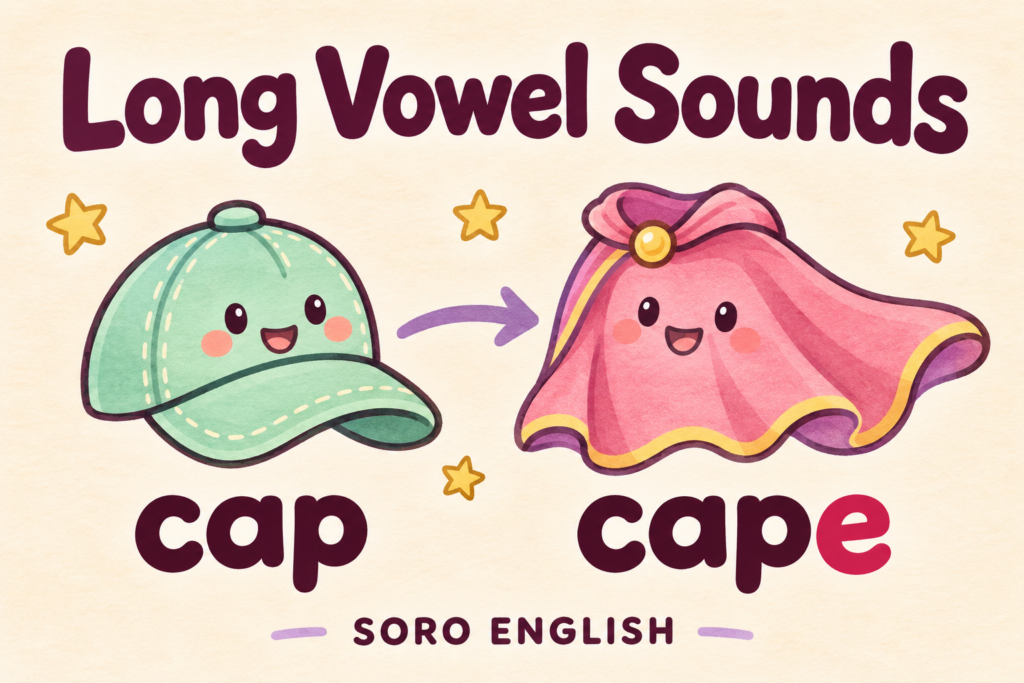
A simple way to check : ask your child to read the first two sentences of a passage. If they read them smoothly with only one or two stumbles, it’s a good fit. If they get stuck on most lines, go back one passage, or practise the tricky words together first. Our guides on short vowel sounds, consonant blends, and long vowel sounds can help.
It’s fine to read the first passage aloud together and let your child take over on the second. The goal isn’t to finish in one sitting. One story and three questions are enough for a day.
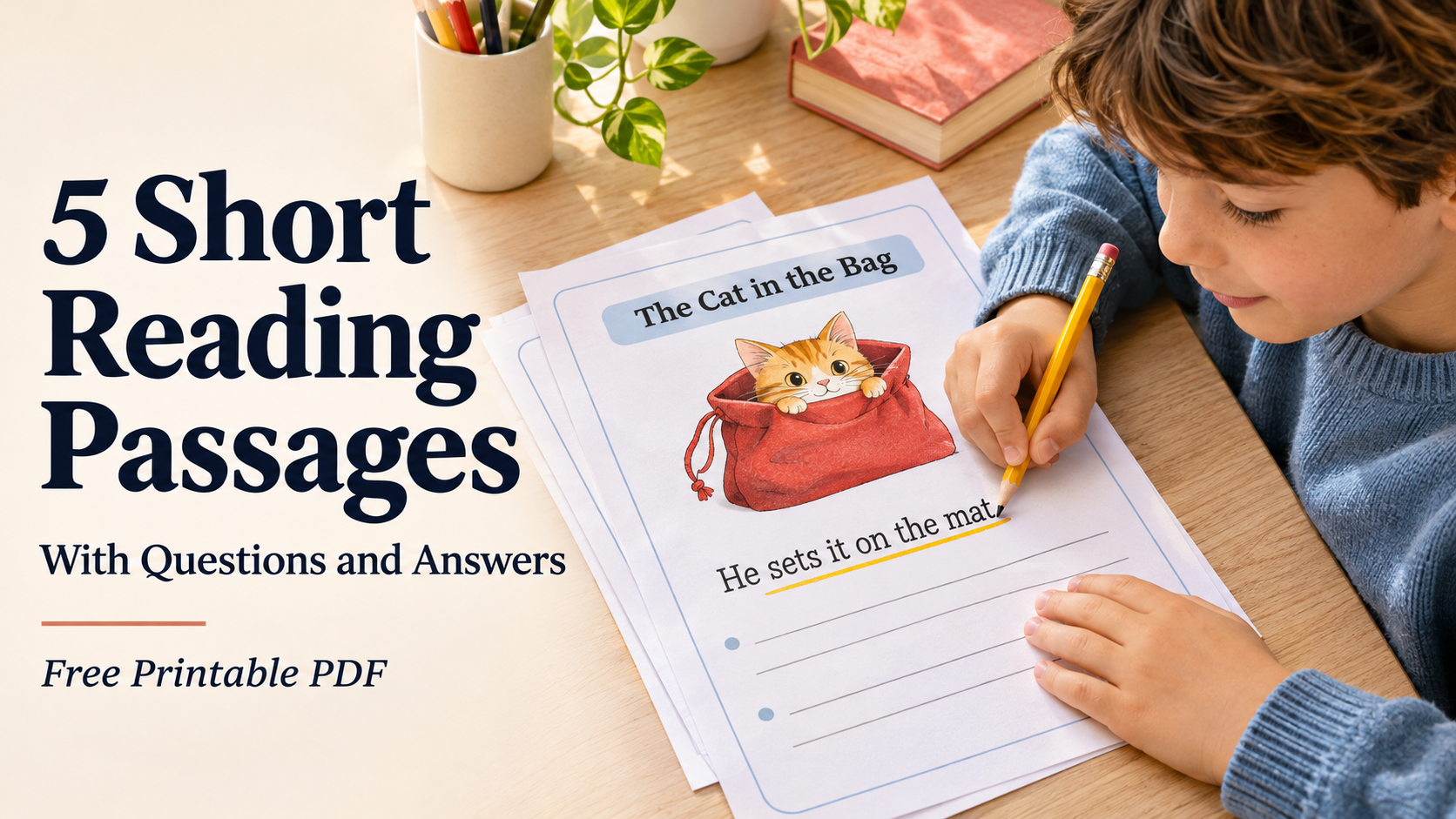
1.The Cat in the Bag
Sam has a red bag.
He sets it on the mat.
His cat, Pip, gets in the bag.
Sam looks in the bag.
Pip pops up!
Questions
1. What color is Sam’s bag?
2. Who gets in the bag?
3. Underline the sentence that tells you where Sam puts the bag.
2. A Hat for Dot
Dot has a big sun hat.
A gust of wind lifts it off her head.
The hat lands by a rock.
Ben picks it up and runs back to Dot.
“Can you hold it for me?” Dot asks.
Questions
1.What lifts the hat off Dot’s head?
2. Who picks up the hat?
3. Underline the sentence that tells you where the hat lands.
3. A Snack for Two
Mia packs two plums for her snack.
At snack time, she sits next to Ben.
Ben opens his lunch bag.
“My snack is still on the kitchen table.” he says.
Mia gives him one of her plums.
They eat their plums together.
Questions
1. How many plums does Mia pack?
2. Where is Ben’s snack?
3. Underline the sentence that shows how Mia helps Ben.
4. A Spot for the Seed
Leo puts a bean seed in a cup of soil.
He adds a little water and sets the cup by the window.
Every morning, he checks the cup before breakfast.
For three days, he sees only soil.
On the fourth morning, a tiny green shoot sticks up.
Leo calls his sister over to see it.
Questions
1. Where does Leo put the cup?
2. When does Leo check the cup each morning?
3. What does Leo see on the fourth morning? Underline the sentence that helped you answer.
5. The Last Page
On Friday, Nora takes a book about a fox home from school.
She reads the first few pages to her little brother.
At bedtime, she stops just before the fox opens a small door.
The next morning, her brother brings her the book before breakfast.
“What’s behind the door?” he asks.
Nora makes room for him on the sofa and opens the book.
Questions
1. What animal is Nora’s book about?
2. When does her brother bring her the book?
3. Why do you think he brings Nora the book? Underline the words that give you a clue.
Answer Key
| Story | 1 | 2 | 3 |
| The Cat in the Bag | It’s red. | Pip, Sam’s cat | “He sets it on the mat.” |
| A Hat for Dot | A gust of wind. | Ben. | “The hat lands by a rock.” |
| A Snack for Two | Two plums. | On the kitchen table. | “Mia gives him one of her plums.” |
| A Spot for the Seed | By the window. | Before breakfast. | A tiny green shoot. The clue is “On the fourth morning, a tiny green shoot sticks up.” |
| The Last Page | A fox. | The next morning, before breakfast. | He probably wants to find out what’s behind the door. The clue is his question, “What’s behind the door?” |
When Your Child Gets Stuck on a Question
Try asking, “Can you show me where you found that?” If your child can point to by a rock, they’ve understood where Dot’s hat landed. You can help them turn those words into a full answer by saying, “It lands by a rock.” and letting them say it back.
With the last story, you can take it one step further. Ask, “Why do you think he brought the book back?”
The story leaves that up to the reader. It’s a small way to end the lesson with the same curiosity that made Nora’s little brother bring back the book.