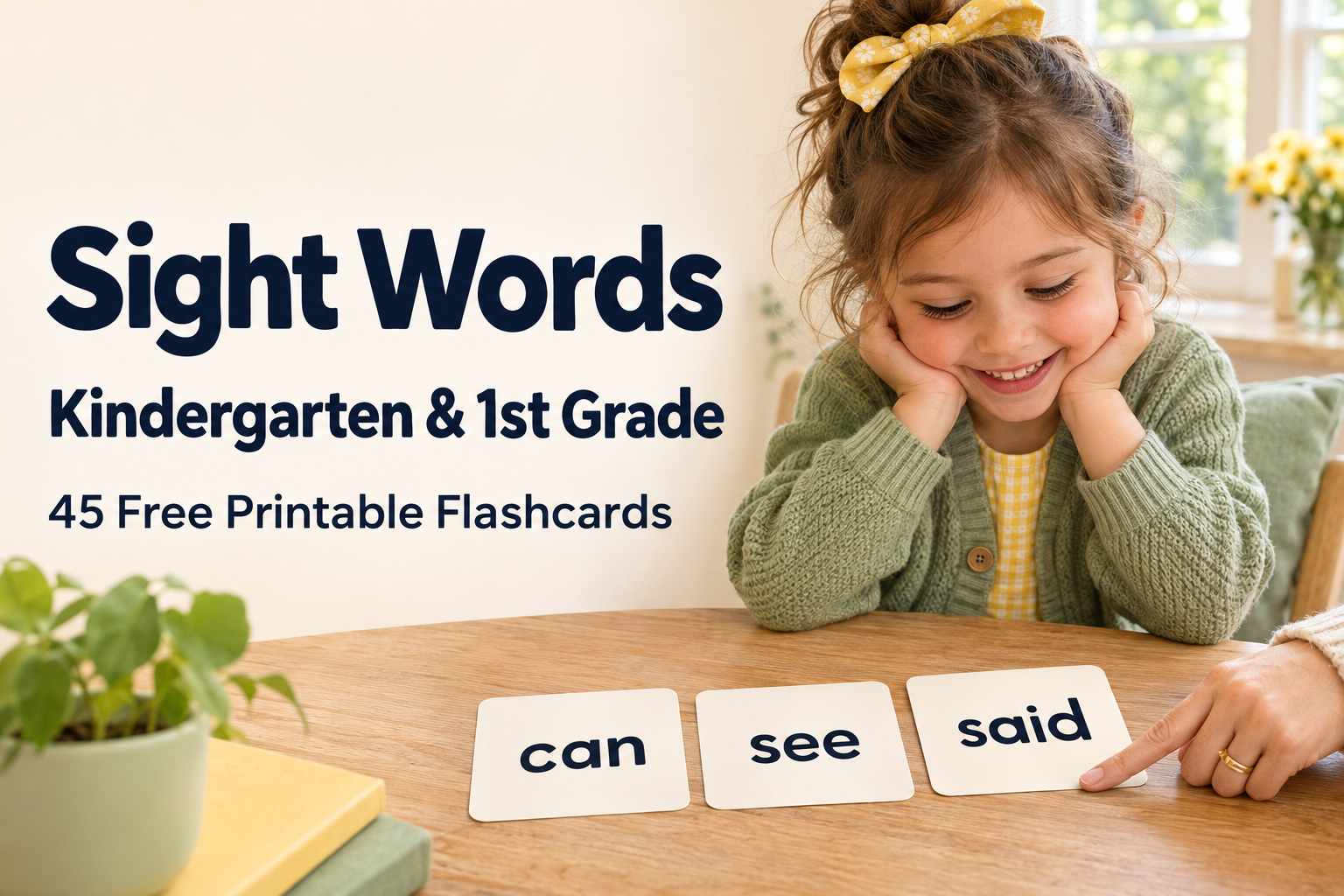
Write the word said on a card and ask your child to read it.
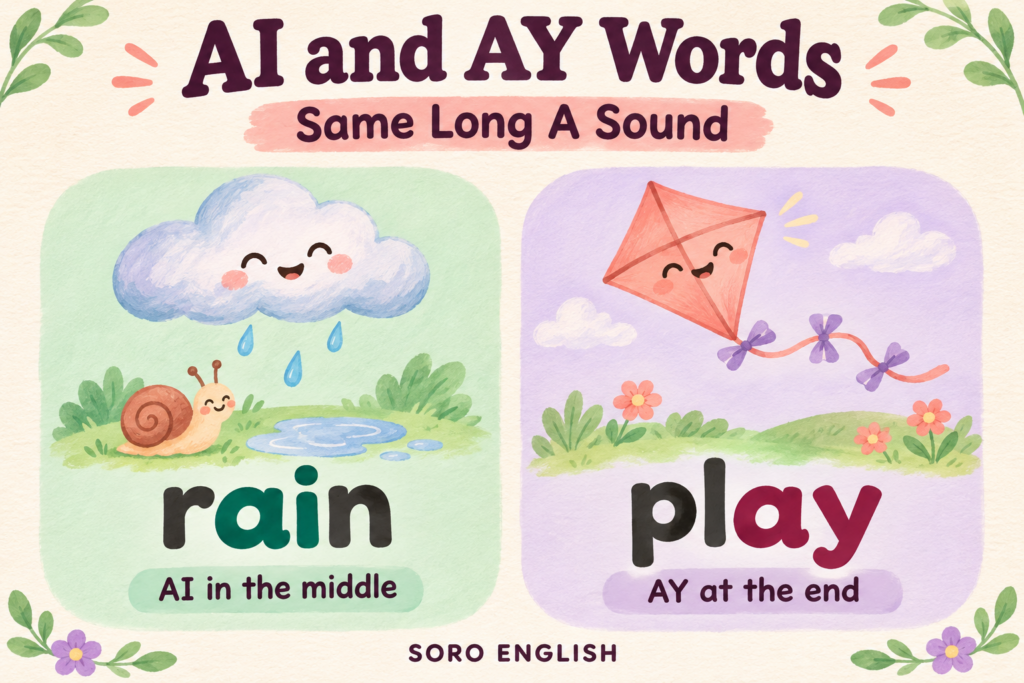
A child might read said as “sayed.” I can see why. They’re using the same ai sound they learned in rain. I’d point to s and d first, then underline ai. “Here’s the surprise. In said, these two letters make the short e sound you hear in bed.” Then we’d blend the sounds and read the word together.
When I taught my students, I noticed that this was the moment some of them started to feel that reading was unfair. Once children see which parts follow familiar patterns, words like said feel easier to tackle. And many of the words on the list, like can and did, are ones they can already sound out.
Below you’ll find a 45 sight words list for kindergarten and 1st grade, sorted into three group, plus a five-minute practice routine and free printable flashcards.
What Are Sight Words?
High-frequency words are words children see often in books, such as the, and, is, and you. A sight word is any word a child recognizes right away. A child may sound our can at first and later recognize it as soon as they see it.
You may also hear about the Dolch list and the Fry list. These are two well-known collections of high-frequency words that teachers have used for decades. The list below brings together 45 common words children are likely to meet in early reading.
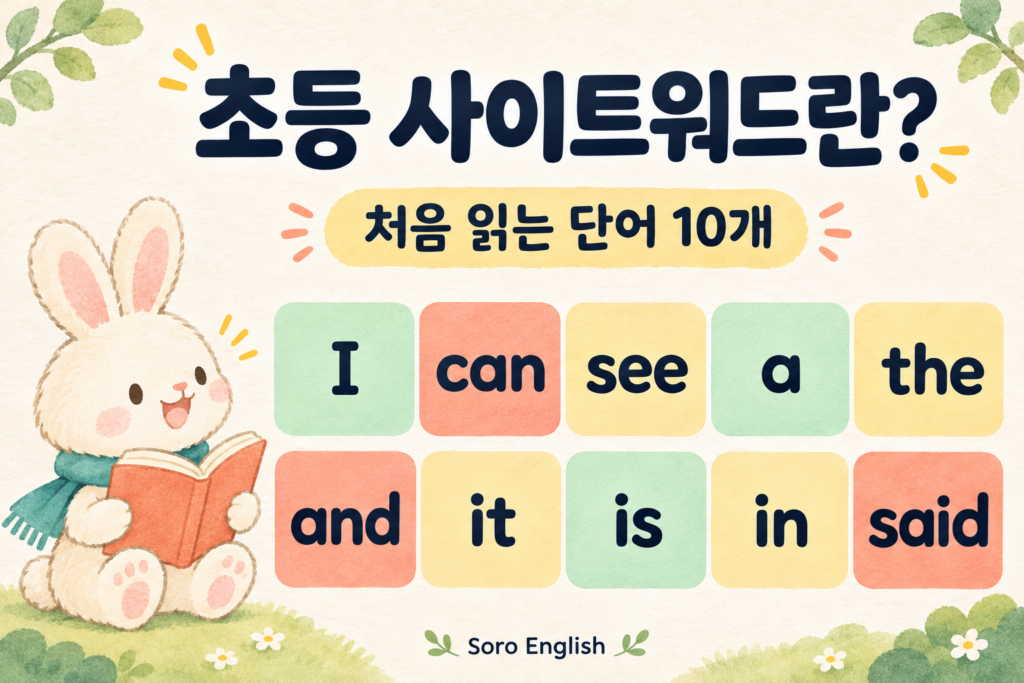
If your child is still learning letter sounds, start with short vowel sounds first. Sight words are easier once those basics are in place. ( For a Korean guide on how phonics and sight words fit together, see 초등 사이트워드란?)
Do Sight Words Come Before or After Phonics?
They go together. A few very common words, such as the, a, and is, show up in the first sentences your child reads, so ti helps to learn them early. But the bigger list works best alongside phonics, because phonics gives your child a way to figure out new words instead of memorizing every one.
A simple rule I like: teach a few sight words at a time, and keep sounding out as the first strategy.
Sight Words List : Three Groups
Instead of one list, try sorting words by how they behave. Here are 45 common words for beginners.
Group 1: Words You Can Sound Out ( Start Here )
Start with simple words like can, in, and run. As your child learns more phonics patterns, add words like and and must, which end in consonant blends. In is, the letter s makes a /z/ sound.
| and | big | can | did |
| get | in | is | it |
| not | on | red | run |
| up | at | am | but |
| yes | will | must | ran |
Tip : If your child is still sounding out can, give them time to blend the sounds. With practice, they’ll begin to recognize the word on sight.
Group 2: Words With More Phonics Patterns
These words use patterns your child may learn after short vowels, such as the silent e in make, the vowel team ee in see, and the oo spelling in look.
| Word | What to notice |
| he, me, we, be | The vowel e says its name |
| go, no, so | The vowel o says its name |
| like, make, ride | Silent e makes the vowel long |
| see, eat, play | Vowel teams ( ee, ea, ay ) |
| look, good | The oo sound |
If these feel now, long vowel sounds will help explain the patterns.
Group 3: Heart Words ( Learn the Tricky Part by Heart )
Some teachers call these heart words. Say the word together, match the sounds you hear to the letters, and point out the part your child needs to remember. A spelling that feels tricky today may become familiar as your child learns more phonics patterns.
| Word | What to point out |
| the | Start with th. In the bag, the vowel is usually a quick “uh” sound. |
| said | ai makes the short e sound you hear in bed. |
| was | the final s sounds like /z/. Say was together and listen to the vowel in your own pronunciation. |
| you | ou makes the “oo” sound you hear in too. |
| to | When you say to by itself, o sounds like “oo,” as in too. |
| are | Say are and compare it with the name of the letter R if they sound alike in your accent. Notice the final e in the spelling. |
| they | ey makes the long a sound. Compare they and day. |
| one | One sounds like won. You hear /w/ at the beginning even though there’s no w in the spelling. |
| what | Say what aloud. Listen to its vowel and compare it with the a in cat. |
| where | Compare where and there. The ere spelling sounds like air in many accents. |
A Five-Minute Sight Words Routine
You only need a few cards and a pencil. Pick three words a day, not ten.
- Look and say. Show one card. Read it aloud together.
2. Match letters to sounds. Point to the letters or letter groups as you say the sounds. If there’s an unexpected spelling, underline that part together.
3. Write it. Have your child write the word once on scarp paper while saying it out loud.
4. Put it in a sentence. Read a short sentence together: “I can see the red bag.” Then ask your child to point to the new word.
5. Play a quick game. Hide a card under a cup. Lift the sup, give your child a moment to look at the letters, and ask them to read the word. Or put three cards on the table and ask, “Can you find was?”
If your child gets a word wrong, stay calm and say it clearly: “This word is said. Let’s read it together.” Then come back to it at the end of practice. Children learn from seeing a word again, not from being corrected over and over.
Free Printable Sight Words Flachcards
Download the printable set below. This printable pack includes all 45 words from the list, organized into three groups, plus a checklist to track which words your child reads easily and which ones need another practice round.
Tip for printing: use the thick paper or glue the cards onto cardstock so they last longer.
Questions Parents Often Ask
How many sight words should my child know in kindergarten?
It varies by school and curriculum. If your school shares a word list, start with a few words from that list. Check whether your child can read them on a card and recognize them again in a simple sentence.
Should my child memorize sight words or sound them out?
Sound out first whenever the word follows a pattern your child knows. For a word with an unexpected spelling, sound out the familiar parts together and point out the part your child needs to remember.
How long does it take to learn a sight word?
In varies by child and by word. Try a quick check the next day. Show one word you practiced yesterday and see whether your child recognizes it or needs another chance to sound it out.
My child guesses sight words from the picture. What should I do?
Cover the picture for a moment and point to the whole word. Help your child look through the letters and blend the sounds they know. Then uncover the picture and reread the sentence together to check what it means.
What to Practice Next
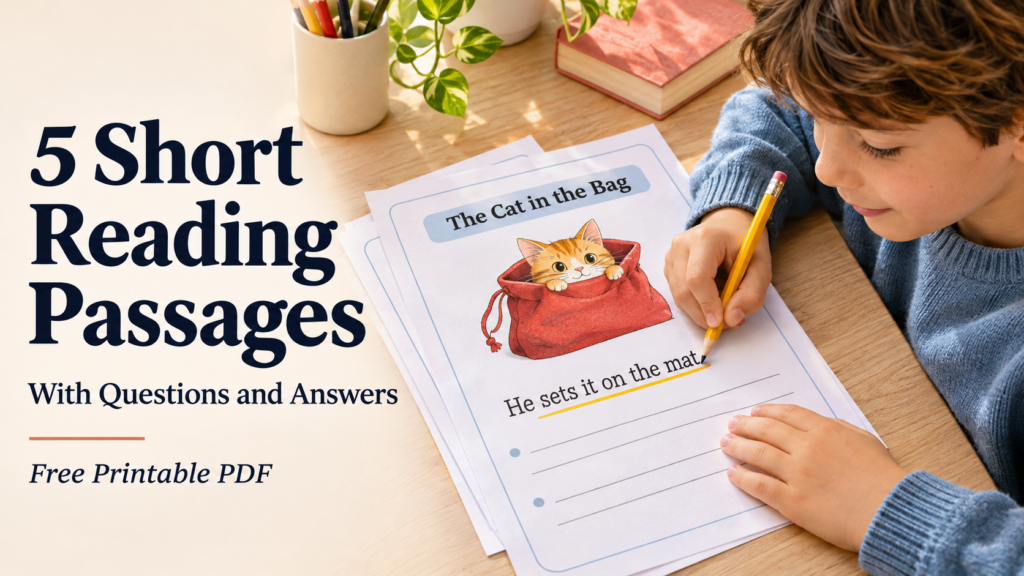
Once your child can read these words smoothly, try the short reading passages with questions. They use many of the words above in real sentences.
If you’d like practice finding answers in a story, text evidence for kids is a good next step.
Small steps add up. Three words a day is enough.
-Soro English