Once a child can blend simple CVC words such as cat, dog, hen, pig, and sun, you may start to notice something interesting.
They already know more words than they realise.
If your child can read cat, for example, learning hat, mat, rat, and sat can suddenly become much easier.
That’s the idea behind word families.
Word families help beginning readers notice that many words share the same ending pattern. Instead of approaching every new word as something completely unfamiliar, children begin to recognise parts they have seen before.
In this guide, we’ll look at some of the easiest word families for beginning readers and, more importantly, how to practise them without turning reading time into memorisation drills.
What Is a Word Family?
A word family isa group of words that share the same ending pattern.

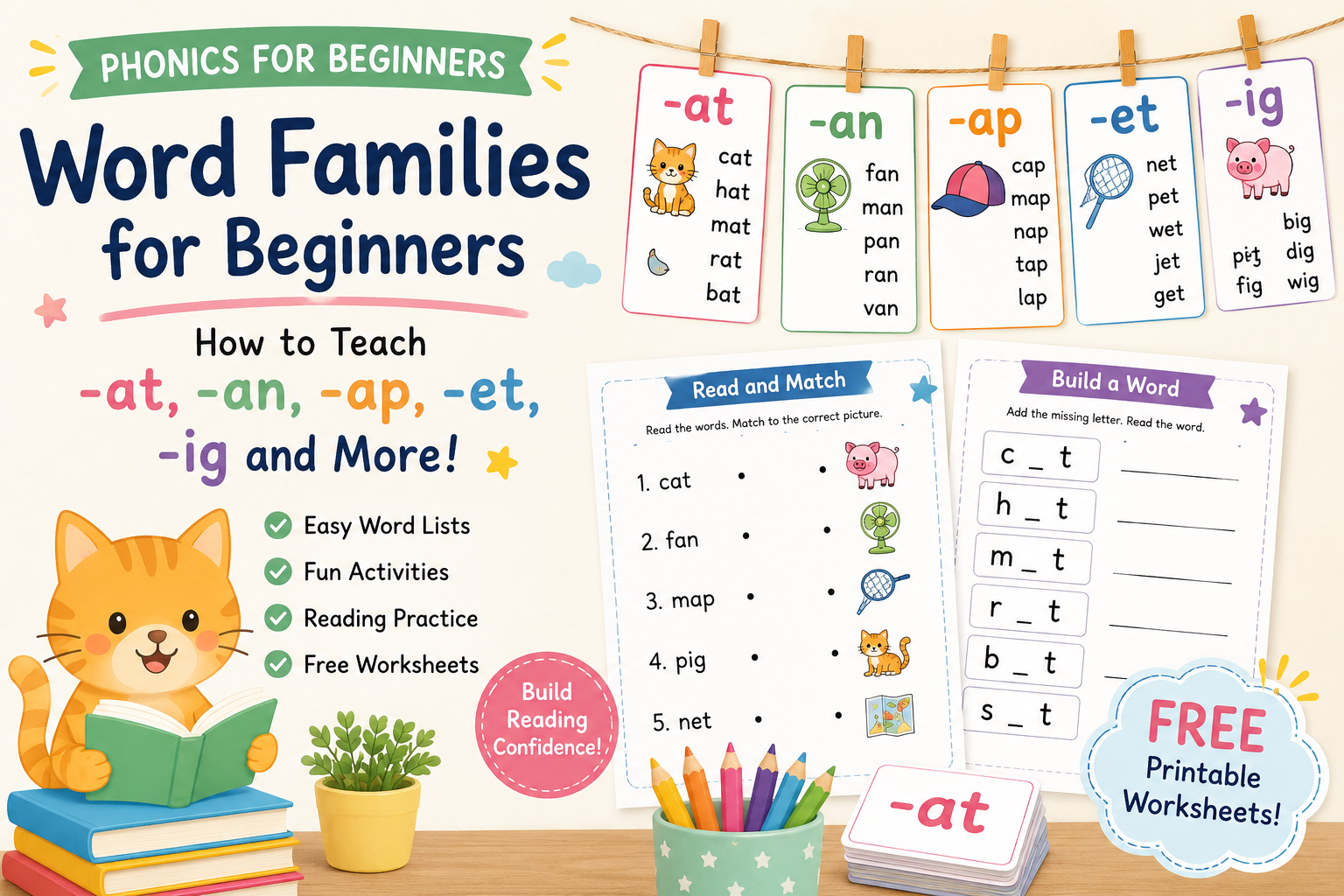
Take the – at family:
Cat
Hat
Mat
Rat
Sat
The beginning sound changes, but –at stays the same.
Another example is the –ig family:
Big
Dig
Fig
Pig
Wig
Once children begin to recognise the shared pattern, they can use what they already know to help decode another word.
Why Teach Word Families?
When children first learn to read, they often concentrate on one sound at a time.
For example :
/c/ /a/ /t/ – cat
That’s an important skill and shouldn’t be skipped.
As children become more confident, however, they can also begin noticing familiar spelling patterns.
If a child already knows cat, seeing hat gives them something familiar to work with.
They can notice:
C + at = cat
H + at = hat
M + at = mat
The aim isn’t to teach children to guess words from their endings.
They should still look carefully at all the letters in the word.
Word families simply give children another useful way to recognise familiar patterns while decoding.
When Should I Introduce Word Families?
You don’t need to wait until your child can read every CVC word.
Word – family activities can be introduced once your child can:
- Recognise common letter sounds
- Blend simple CVC words
- Distinguish short vowel sounds
- Read some CVC words without help
If words such as cat, hen, pig, dog, and sun are becoming manageable, word families can be a useful next step.
If blending is still very difficult, spend more time on individual CVC words first.
Start With the -at Word Family
The -at family is a simple place to begin.
Try:
At
Bat
Cat
Fat
Hat
Mat
Pat
Rat
Sat
Write -at on a card or piece of paper.
Then change only the first letter.
C + at – cat
H + at – hat
M + at – mat
Ask your child to read each new word.
Once the pattern becomes familiar, mix the cards up so your child still has to look carefully at the beginning of each word.
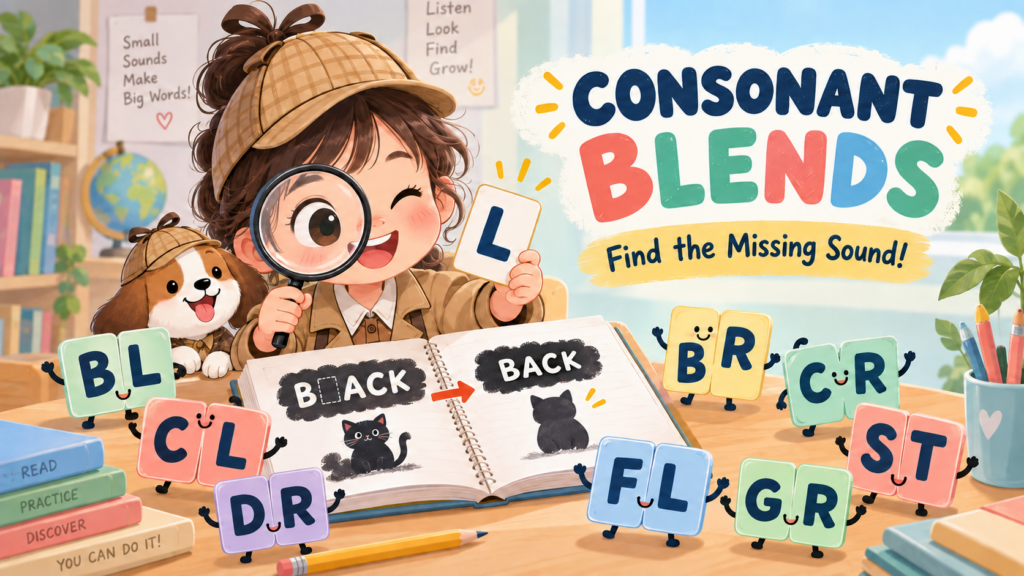
Short A Word Families
After -at, try a few more short -a patterns.
-an
Can
Fan
Man
Pan
Ran
Van
-ap
Cap
Gap
Lap
Map
Nap
Tap
–ag
Bag
Tag
Rag
Wag
-am
Ham
Jam
Ram
You don’t need to teach all of these at once.
Choose one family and spend a little time reading and playimg with those words before introducing another.
Short E Word Families
When your child is comfortable with short a, move onto short e patterns.
–et
Get
Jet
Net
Pet
Wet
–en
Den
Hen
Men
Pen
Ten
–ed
Bed
Fed
Red
Short -e words can be especially useful for quick reading games because many of them are familiar words children already hear in everyday speech.
Short I Word Families
Try these short -i families.
–ig
Big
Dig
Fig
Pig
Wig
–in
Bin
fin
Pin
Tin
Win
–it
Bit
fit
Hit
Kit
Sit
–ip
Dip
Hip
Lip
Rip
Sip
Tip
Once your child can read one family confidently, mix words from two families together.
For example:
Pig – sit – big – hit – dig – fit
Now your child has to pay attention to the whole word rather than relying on a single pattern.
Short O Word Families
–og
Dog
Fog
Hog
Jog
Log
–op
Hop
Mop
Pop
Top
–ot
Cot
Hot
Pot
Rot
Try putting some of these words into simple sentences:
The dog can jog.
The pot is hot.
A fox is on the log.
This connects word – family practice with actual reading.
Short U Word Families
–ug
Bug
Hug
Jug
mug
Rug
–un
bun
Fun
Run
Sun
–ut
Cut
Hut
Nut
–ub
Cub
Rub
Tub
Again, children don’t need to memorise every word.
The goal is to help them become comfortable noticing and decoding familiar patterns.
5 Easy Ways to Practise Word Families
You don’t need expensive materials or a complicated lesson plan.
1.Build a word. Write –at on a card and prepare separate letters such as c, h, m, r and s. Let your child change the first letter and read each new word.
2.Find the odd one out. Write cat – hat – pig – mat and ask which word doesn’t belong to the –at family.
3.Sort the words. Mix –at and –an words together and ask your child to sort them into two groups.
4.Read a sentence. Move from isolated words to simple sentences such as “The cat sat.” or “The pig can dig.”
5.Make a silly sentence. Let children create funny sentences from words they can read. They don’t always have to make perfect sense. Sometimes silly sentences are the ones children want to read again.
*Download the Free Word Family Worksheets
Try This 10 – Minute Word Family Routine
Word – family practice doesn’t need to take long.
Try:
2 minutes – Review
Read five familiar CVC words.
3 minutes – Learn
Introduce one word family.
2 minutes – Build
Change the first sound to make new words.
2 minutes – Read
Use two or three words in simple sentences.
1 minute – Celebrate
Ask your child which new word was easiest or funniest.
Then stop.
A short successful lesson is often better than continuing until a child becomes tired or frustrated.
Don’t Teach Word Families as Rhyming Lists Alone
It can be tempting to have children memorise:
Cat, hat, mat, rat, sat
Over and over.
But recognising a rhyme isn’t the same as being able to decode a word.
Occasionally mix the words.
Instead of :
Cat – hat – mat – rat
Try :
Cat – pig – hat – sun – mat
Their encourages children to look at the letters rather than simply predicting what comes next.
Move From Words to Sentences
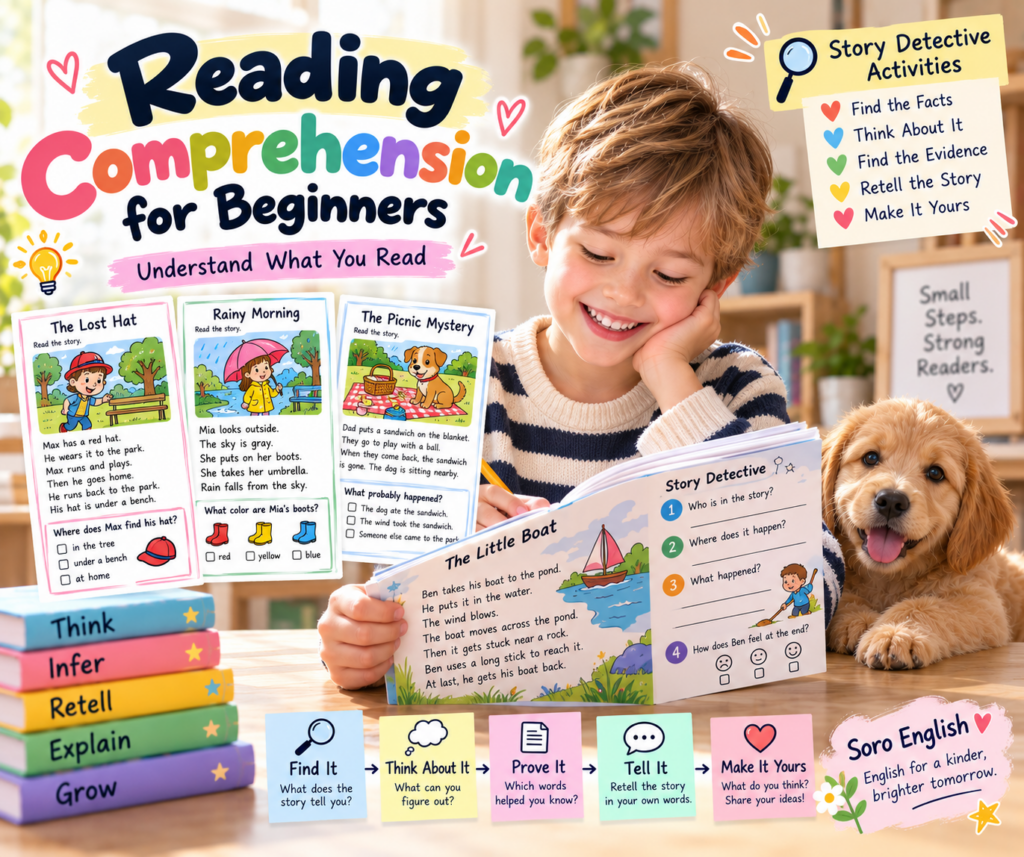
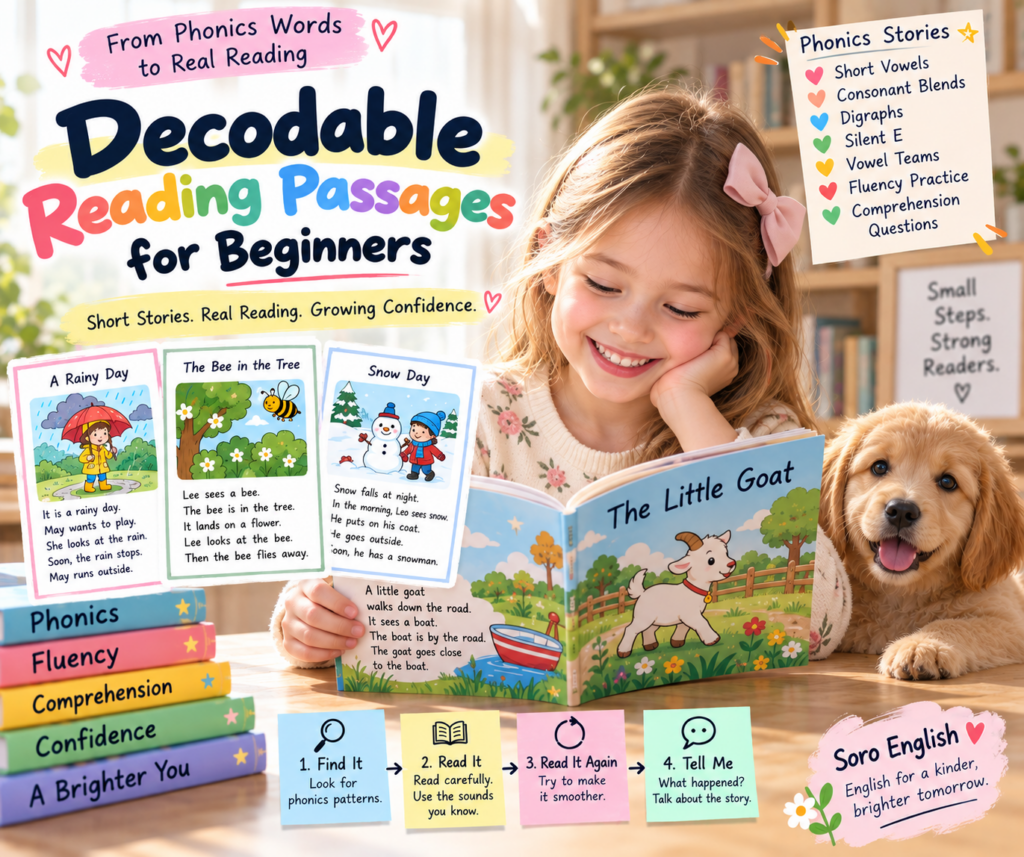
Once your child can read several words from a family, put them into short sentences.
For the -at family:
A cat sat.
The cat is fat.
Dad has a hat.
The rat is on the mat.
For the -ig family
The pig can dig.
The big pig ran.
For the -ug family
A bug is on the rug.
The bug is in the mug.
This is where word – family practice starts becoming real reading practice.
Then Move From Sentences to Stories
After practising individual words and sentences, use them in a tiny story.
For example:
The Cat on the Mat
A cat sat on a mat.
The cat is fat.
A rat ran past.
The cat ran.
The rat ran too.
Even a very short story gives children something that a word list can’t : meaning and context.
After reading, ask:
Where did the cat sit?
What ran past the cat?
What happened at the end?
This helps children understand that reading isn’t simply about words correctly.
It’s about understanding what those words are telling us.