If your child can read words like cat, frog, clap and shop, you may be wondering what to teach next.
One of the next phonics skills I like to introduce is consonant digraphs.
This is also a point where some children become confused.
They’ve spent do much time learning that each letter has a sound. Then suddenly, they see two letters sitting together and need to read them as a sound pattern.
s + h = sh
c + h = ch
t + h = th
At first, that can feel like a completely new rule.
But it doesn’t have to be difficult.
Instead of introducing a long list of digraph words at once, I prefer to teach one pattern at a time and give children plenty of opportunities to hear it, find it, read it and use it in a sentence.
Here’s how I teach the first digraphs to beginning readers.
First, What is a Digraph?
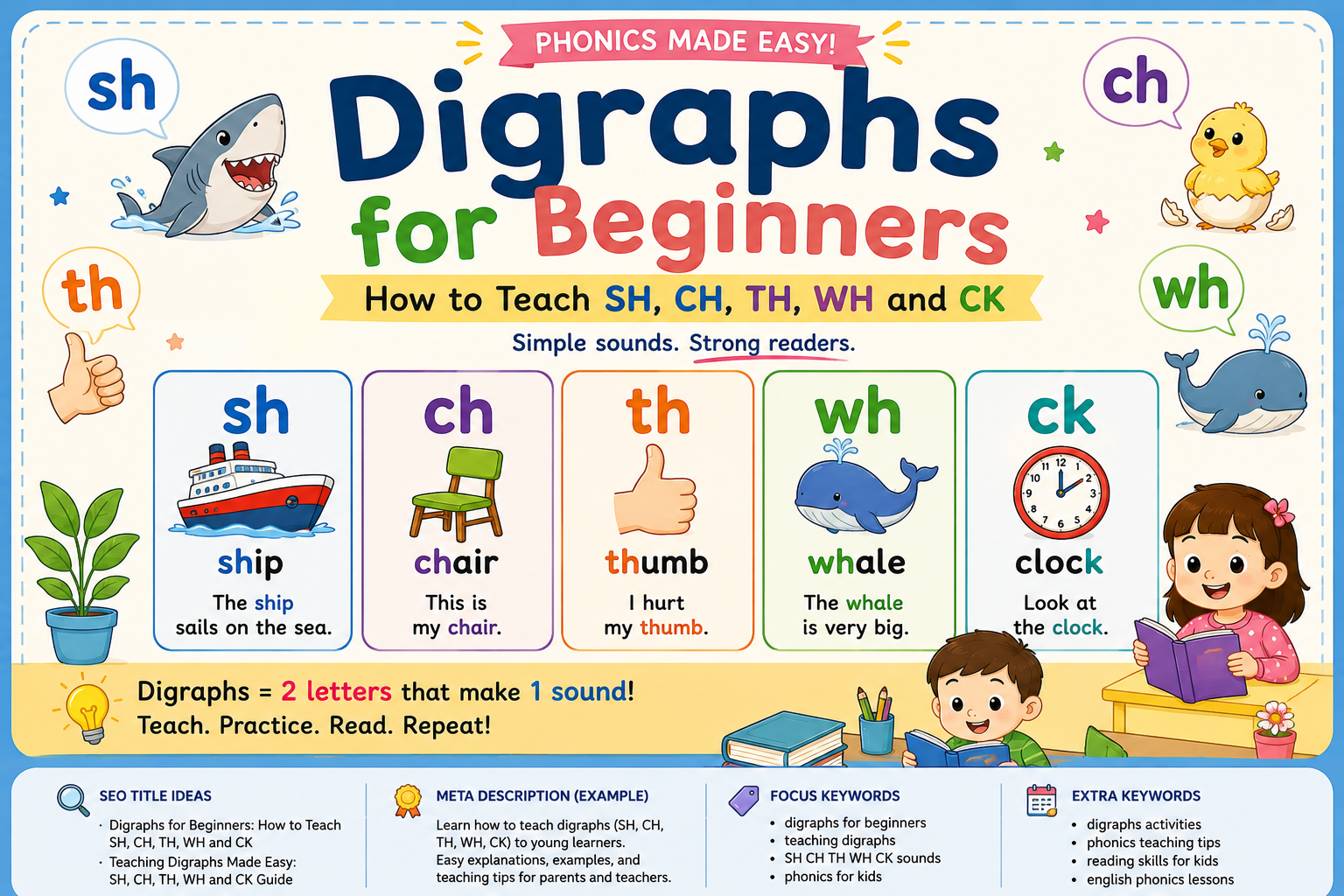
A digraph is a pair of letters that work together to represent a sound.
Some common consonant digraphs are :
Sh, ch, th, wh, ck
For example:
Sh – ship
Ch – chat
Th – thin
Wh – when
Ck – duck
The important idea for a beginning reader isn’t memorising the word diagraph.
It’s understanding:
“When I see these letters together, I need to think about the sound pattern they represent.”
Digraph or Blend?
Here’s the Difference
This is something parents often ask me about.
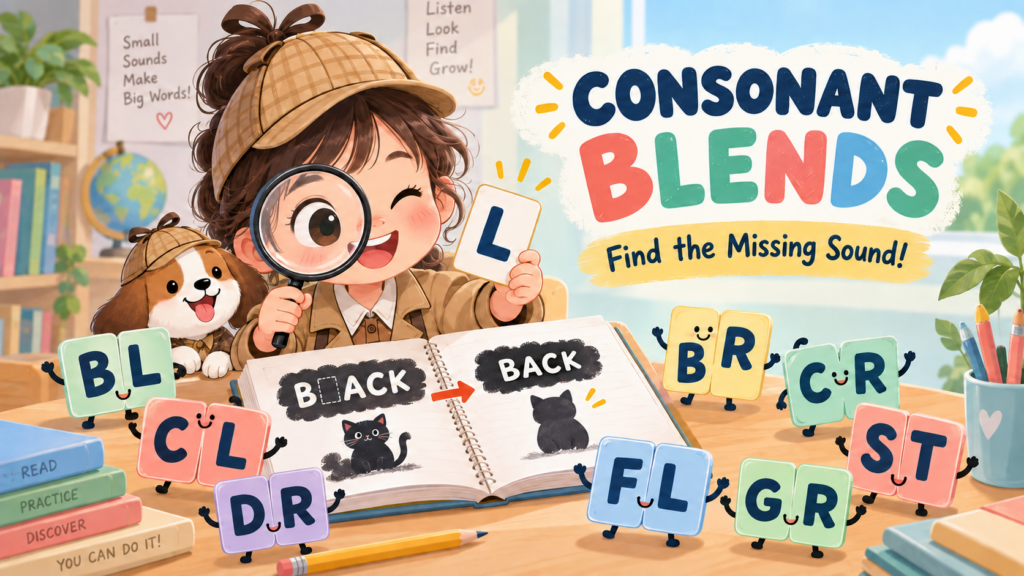
A consonant blend contains consonant sounds that cat still be heard separately.
Take:
Frog
At the beginning of the word, you can hear:
/f/ /r/
Both sounds are still there.
Now compare that with:
Ship
We don’t usually teach a child to read the beginning as separate /s/ + /h/ sounds.
Instead, sh is treated as a digraph representing the sound at the beginning of ship.
So a simple way to remember it is:
Blend → hear the consonant sounds separately
Digraph →letters work together as a sound pattern
You don’t need to spend a whole lesson explaining the terminology to a five – or six – year – old.
Show them through words.
That’t usually much easier.
Is My Child Ready for Digraphs?
Before starting digraphs, I would check whether a child can already read simple words such as:
Cat
Hen
Pig
Dog
Sun
and some words containing consonant blends, such as:
Clap
Flag
Frog
Stop
They don’t have to read every word perfectly.
But they should have a basic understanding of blending sounds from left to right.
If CVC words are still very difficult, I wouldn’t rush.
A little more practice with short vowels and CVC words can make the next step much easier.
Which Digraph Should I Teach First?
There’s no single sequence every child must follow.
For beginners, however, I like starting with highly noticeable patterns such as:
Sh and Ch
Then I gradually introduce:
Th
Wh
and
Ck
I wouldn’t put all five on the table on the first day.
One pattern at a time is enough.
1.Teaching SH
Start by showing:
Sh
Say the sound together.
Then introduce a few simple words.
Shop
Ship
Shut
Shed
Fish
You can ask:
“Can you hear /sh/ at the beginning or at the end?”
For example:
Ship → beginning
Fish → end
This helps children realise that the same spelling pattern can appear in different positions.
Try it
Which words have sh?
Ship
Cat
Fish
Shop
Dog
Children can point, circle or write the words.
2.Teaching CH
Next, try:
Ch
Start with familiar words such as:
Chat
Chin
Chop
Chick
Then compare:
Shop
and
Chop
Only the beginning has changed.
Ask your child to look carefully.
Sh-op
Ch-op
This kind of comparison can be more useful than reading a long list of unrelated words.
3.Teaching TH
TH needs a little more attention because English uses more than one sound associated with this spelling.
Compare:
thin
and
this
The mouth position is similar, but the sounds aren’t identical.
For a young beginner, I wouldn’t start with a long explanation about voiced and unvoiced sounds.
Instead, let the child hear and feel the difference.
Try:
thin
this
Ask your child to gently place a hand on their throat.
Say each word.
Can they feel a difference?
This turns a difficult phonics point into a small sound experiment.
Beginner TH Words
thin
than
that
this
them
with
Choose words that suit the phonics patterns your child has already learnt.
4.Teaching WH
Now introduce:
Wh
Tru words such as:
When
Whip
Whiz
Many common wh words aren’t fully decodable for children at the earliest phonics stages, so I din’t recommend giving beginners a huge WH list.
Instead, teach a few useful examples and focus on recognising the spelling pattern.
You can say:
“Can you find the two letters working together?”
Then let the child point to:
Wh
5. Teaching CK
Ck is especially useful because children see it frequently at the end of short words.
Try:
Back
Neck
Kick
Rock
Duck
Look at where ck appears.
It’s at the end of each of these words.
Ask:
“Can you find ck?”
Then let your child underline it.
This makes spelling patterns more visible.
My favorite Way to Teach a New Digraph
I use a simple four – step routine.
1. Hear it
Say the sound first.
For example:
/sh/
Ask your child to repeat it.
2. Find it
Show three words:
Ship
Cat
Shop
Ask:
“Which words have sh?”
3. Read it
Now read:
Ship
Shop
Shut
Keep the list short.
4. Use it
Put one word into a sentence.
The ship is big.
Then ask a quick question:
“What is big?”
Now the child isn’t only practising phonics.
They’re reading for meaning too.
A simple 10-Minute Digraph Lesson
You don’t need a 30-minute phonics lesson at home.
Try this:
Minutes 1-2: Review
Read three of four words your child already knows.
Minutes 3-4 : Introduce
Show one new digraph.
For example:
Sh
Say the sound and look at the letters.
Minutes 5-6 : Read
Read three or four SH words.
Minutes 7-8 : Play
Find SH words among other words.
Minutes 9-10 : Read a Sentence
Finish with one or two short sentences.
Then stop.
I would rather have a child finish thinking,
“That was easy!”
than push through another ten minutes until they’re tired of reading.
Try a Digraph Hunt
This is one of the easiest activities to prepare.
Write:
Ship
frog
chat
fish
duck
stop
Then ask:
Find SH.
The child circles:
Ship
fish
Next:
Find CH.
They circle:
Chat
Next:
Find CK.
They circle:
Duck
You can turn it into a detective game:
“Can you find all the hidden digraphs?”
No special materials required.
Play Digraph Detective
Children often respond better when an exercise feels like a misson.
Try saying:
“You’re the Digraph Detective today.”
Give your child five words:
Shop
chop
thin
duck
fish
Then ask them to :
- Circle the digraph
- Say its sound
- Read the whole word
That’s three phonics skills in one very small activity.
Sort the Words
Once your child knows several digraphs, mix them together.
Try:
Ship
chat
thin
duck
shop
chop
this
rock
Then sort them into:
SH
ship
shop
CH
Chat
chop
TH
thin
this
CK
duck
rock
This is a good way to check whether your child is actually noticing the letters rather than simply remembering a list.
Read Digraphs in Sentences
Don’t stay with isolated words for too long.
Once your child can read several words, move into short sentences.
Try:
The ship is big.
The chick can hop.
The fish can swim.
The duck is in the pond.
This cat is big.
Then ask one quick question after each sentence.
For example:
What can swim?
Or
Where is the duck?
Phonics should eventually lead to understanding, not just sounding out words.
What If My Child Keeps Mixing Up SH and CH?
This is very common.
Instead of correcting the child over and over, put the two patterns next to each other.
Sh
Ch
Then compare two words:
Shop
Chop
Say them slowly.
Let your child listen to what changes.
You can even exaggerate the beginning slightly at first.
Then try another pair.
The goal is to help the child hear the difference, not simply memorise which card is which.
One Mistake I Try to Avoid
When a child struggles with a word, it’s tempting to say:
“Look at the picture. What do you think it says?”
Pictures are wonderful for enjoying stories and discussing meaning.
But during a decoding activity, I want the child to look at the letters.
If the word is ship, I’ll point to sh and ask”
“What sound do these letters represent here?”
Then we blend through the word.
Pictures can confirm meaning afterwards.
The letters should do the decoding work.
Don’t Teach Too Many Words at Once
A page containing 30 SH words may look impressive.
But a beginning reader doesn’t necessarily need 30 words today.
Start with four or five.
Read them.
Play with them.
Put one into a sentence.
Come back tomorrow.
Small amounts of successful practice can build much more confidence than one exhausting lesson.
From Digraph Words to Mini Stories
When your child can read several digraph words, try a very short passage.
The Fish
A fish is in a pond.
The fish can swim.
A duck is in the pond.
The fish and the duck have fun.
Then ask:
Where is the fish?
What can the fish do?
What other animal is in the pond?
Even a tiny passage begins connecting phonics with comprehension.
That’s where reading starts becoming much more meaningful.
Free Printable Digraph Worksheets
If your child is ready for extra practice, a printable pack can make these much easier to repeat.
Keep the worksheets short and use one or two pages at a time.
The goal isn’t to finish the pack.
The goal is to help your child read.
Frequently Asked Questions
What are the first digraph children should learn?
There isn’t one universal order, but sh, ch, th, wh and ck are common patterns children encounter in early phonics instruction.
Introduce them gradually rather than teaching them all at once.
Are SH and CH blends?
No. They are commonly taught as consonant digraphs.
With a blend such as fr, we can hear the individual consonant sounds in frog.
With sh in ship, the letters work together to represent the beginning sound.
Why does TH have two sounds?
Compare thin with this.
The spelling is the same, but the sounds differ in vocing. Beginning readers don’t necessarily need the terminology yet.
Listening, comparing and practising the words is usually a better starting point.
How many digraph words should my child practise each day?
There’s no magic number.
For a beginner, four or five carefully chosen words plus one or two sentences can be plenty.
What should children learn after consonant digraphs?
Once common digraphs are becoming familiar, you can continue building reading fluency and gradually introduce more advanced vowel patterns, including long vowel sounds and silent e.
What Should We Learn Next?
So far, your child has moved through an important reading journey.
Letter sounds
⬇️
Short vowels
⬇️
CVC words
⬇️
Word families
⬇️
Consonant blends
⬇️
Consonant digraphs
The next step we’ll explore is:
Long Vowel Sounds for Beginners
We’ll look at how words such as:
Cap ➡️ cape
kit ➡️ kite
hop ➡️ hope
Change when silent e is added.
This is a big step for beginning readers, but once children see the pattern clearly, it can be surprisingly fun to teach.
Final Thoughts
Digraphs may seem like a small phonics skill, but they open the door to a much larger group of words.
The key is not to rush through a list of patterns.
Start with one.
Let your child hear it.
Find it.
Read it.
Then use it in a sentence.
When that becomes comfortable, introduce another.
That’s the approach I use because I want children to do more than finish a worksheet.
I want them to look at a new word and think:
“I know what to try.”
And that little bit of confidence can make a big difference when a child is learning to read.
Happy reading!
ㅡSoro English